
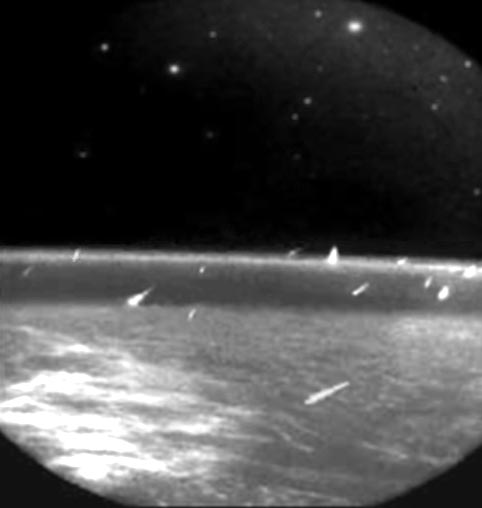
*Meteors are pieces of space debris, usually left by a comet as it orbits our Sun. Although meteors can be large, the typical size of the particle that produces such a lovely display in our sky ranges from about the size of a grain of sand to the size of a small pebble.
*These particles burn up in our atmosphere before reaching the ground. Most meteors may be tiny, but because they hit our atmosphere with great velocity, they glow brightly as they burn up and thus we are able to see them.
*Meteor showers are heavier displays that recur from year to year. The number of meteors visible depends upon the shower, but the number of visible meteors can range from 5 per hour to 100 per hour or more.
*Most meteor showers are at their best after midnight. After midnight, you're on the leading edge of the Earth and you're meeting the meteors head on. Before midnight, you're on the trailing edge of the Earth and the meteors have to catch up to you. As a result not only are more meteors seen in the pre-dawn hours, but their impact speeds encountering the Earth's atmosphere are much higher and the meteors are generally faster and brighter.
*November has two major meteor showers, the Taurids (5th Nov)and the Leonids.
*The Taurids have a peak rate of 12 meteors per hour, or about one every five minutes on average.


0 comments:
Post a Comment